Last #TradeViews before a much-needed Christmas break. In this edition, we continue reporting on the always tricky EU-US negotiations and give you the last updates on the new proposed measures to save the EU steel industry. Also, more on EU-India negotiations, EU-Mercosur and digital cooperation with the Pacific Rim.
EU-US: do ut des (?)
The EU and US have kept busy with trade negotiations throughout November. Last week, US Commerce Secretary Howard Lutnick and Trade Representative Jamieson Greer were in Brussels to progress talks on the implementation of the EU-US Joint Statement on trade. On one side, the EU is hoping to have more industrial sectors exempted from the US reciprocal tariffs and to reopen discussions on the 50% tariffs on steel and aluminium, which Washington extended to over 400 products. On the other hand, the US asked the EU for a “legally binding agreement” on trade and tariffs and to adopt a “balanced approach” on the EU’s digital rules, the DMA and DSA.
As concerns the first point, the European Commission is currently on the fence, as several technical aspects of the Joint Statement still remain to be discussed. The EU is already working on the implementation of certain elements of the agreement, notably the proposal to remove tariffs on US industrial goods, which is undergoing the ordinary legislative procedure. While the European Council has already adopted a position mostly in line with the Commission proposal (with the exception of a stronger bilateral safeguard mechanism), discussions in the European Parliament might prove more complex. In the INTA Committee, MEPs have proposed over 175 amendments to the Commission’s text, with several Groups supporting a sunset clause and safeguard mechanism to suspend the agreement in case of serious injury to EU industries, and the Greens and Left groups going as far as to propose the rejection of the text.
On digitalisation, the Commission reiterated its commitment to its regulatory autonomy, with Trade Commissioner Maroš Šefčovič underlining that neither the DMA or the DSA are discriminatory towards American tech giants and EVP for Technological Sovereignty Henna Virkkunen stressing that neither text is “up for negotiation”. EVP for a Clean Transition and Competition Teresa Ribera went even further, referring to the US request as “blackmail”.
As EU trade diplomats is preparing to return to the US to continue negotiations, make sure to follow #TradeViews for any new update!
Our Take: While the position of the Council hardly introduces any new elements compared to the Commission’s proposal, most major Groups in the Parliament seem committed to a more ambitious position, with even the EPP supporting a sunset clause for any tariff exemption for the US. This could lead to difficult negotiations during trilogues and potentially undermine the current delicate balance in negotiations efforts between the EU and US.
Zoom in: Several anonymous EU diplomats underline that the demand for a legally binding agreement is a “known ask” from Washington.
Zoom out: Concluding a properly legally binding agreement with the US would require a much lengthier procedure compared to the current implementation efforts of single elements of the joint statement between the two blocs.
Everybody loves the new steel measures (almost)
The EU is in the process of adopting new permanent measures to protect the EU steel sector, but not everybody is so fond of the work done so far. The new measures are meant to replace the current steel safeguards, which will expire in June.
Of note, the Commission proposed limiting tariff-free imports of steel to 18.3 million tonnes a year (almost half of the 2024 quota), introducing 50% tariffs on out-of-quota imports, and strengthening the traceability of steel markets by requiring importers to demonstrate the country in which the steel was melted and poured (Melt-and-Pour criterion).
This week, the text was also examined by the INTA Committee in the Parliament.
Of note, Rapporteur Karin Karlsbro also proposed bannig imports from Russia and Belarus, reducing administrative burden for companies when reporting on melt-and-pour, and allowing for the use of unused quarterly quotas in the following quarters. As the measure will need to enter into force before June, Karlsbro asked MEPs in the INTA Committee to only send targeted amendments, with a view to launching trilogues in Q1 2026, once the Council also adopts a position.
The industry’s position has been mixed. The European Steel Association (EUROFER) welcomed the proposal and called on the Parliament and Council to adopt it without delay. The downstream sector is, however, more critical. Among others, the European Automobile Manufacturers Association (ACEA) stressed that the measures goes too far, as cars still rely on certain imported steel grades not sufficiently available at EU level.
Bring It Home, Maroš!
As the deadline approaches, talks between Brussels and India appear to be running into obstacles once again, given the persistent disagreements on some sensitive matters. The main sticking point is New Delhi’s demand for an exemption from the EU’s planned carbon border tax (the so-called CBAM). India is not exactly a big fan of the EU’s efforts to shield its steel industry either, as it would increase costs for Indian businesses.
These delicate issues will definitely be on the menu during Trade Commissioner Maroš Šefčovič’s visit to India planned for before Christmas.
Complicating things further, India’s continued close ties with Russia is another major concern for the EU. Putin’s visit to India this week to pitch more Russian oil and defence equipment sales is unlikely to ease the EU–India talks. Adding to the challenge are India’s conservative positions in several key sectors, including agriculture, vehicles, and car parts, making it even trickier for the European delegation to return with a deal before the end-of-year deadline.
Šefčovič, however, seems optimistic: “We’ve never been as far as we are right now in our negotiations,” but cautious at the same time: “Will we be able to resolve everything? I don’t know.”
Who would have guessed it? The favourable winds are actually coming from the Trump administration. Its aggressive tariff policy towards both India and the EU is nudging both sides to speed up their long-delayed negotiations and finally lock in some new trade alliances, whether they like it or not.
Will it be a Merry Christmas for the EU-Mercosur Agreement?
As Brussels approaches the holiday season, EU leaders have only one gift at the top of their Christmas list: the signature of the EU-Mercosur deal on December 20. However, seasonal chaos is standing between the Commission and its plans to seal the deal before the end of 2025. The proposal on bilateral safeguards clauses for farmers remains politically crucial for the Commission, which wants it approved before the broader deal is signed. The file, approved without amendments by the Council, is set to be voted first by the INTA Committee, and then in plenary on December 16. The text was supposed to be adopted through a fast-track procedure, but the EPP withdrew its support for the request, fearing that a majority would not be reached.
Debates on the text were particularly evident in the AGRI Committee, where MEPs complained over their limited involvement in the discussions and the increased pressure from the Commission to swiftly approve the proposal.
Moreover, tensions remain high over the approval of the broader EU–Mercosur Agreement in the Council, with the Netherlands supporting ratification, Poland reaffirming its opposition, and the French National Assembly urging the government to vote against it. The European Parliament also remains divided, with 145 MEPs drafting a letter to President Roberta Metsola urging her to seek a CJEU opinion on the legality of the EU-Mercosur deal, and others such as INTA Chair Bernd Lange voicing his backing for it.
EU-CPTPP: Digital (trade) love
On November 20, the EU and the CPTPP (a 12-country Pacific Rim trade bloc) sat down in Australia with a clear objective: to expand cooperation in the area of trade and digital trade, and investment.
The headline outcome? Both sides agreed to start drafting concrete workplans on issues of shared interest ahead of their next meeting in 2026. According to the EU Trade Commissioner Maroš Šefčovič, this move is more than a symbolic gesture. Brussels insists the new channel will deliver real impact across five priority areas: trade diversification, digital trade, trade and investment facilitation, supply chain resilience, and the broader global trade environment.

With the WTO still mired in deadlock, the new EU–CPTPP dialogue is seen as a practical way to maintain rules-based cooperation among partners that together account for roughly 30% of global trade, offering a useful complement to existing structures and a modest contribution to shaping future international trade cooperation.
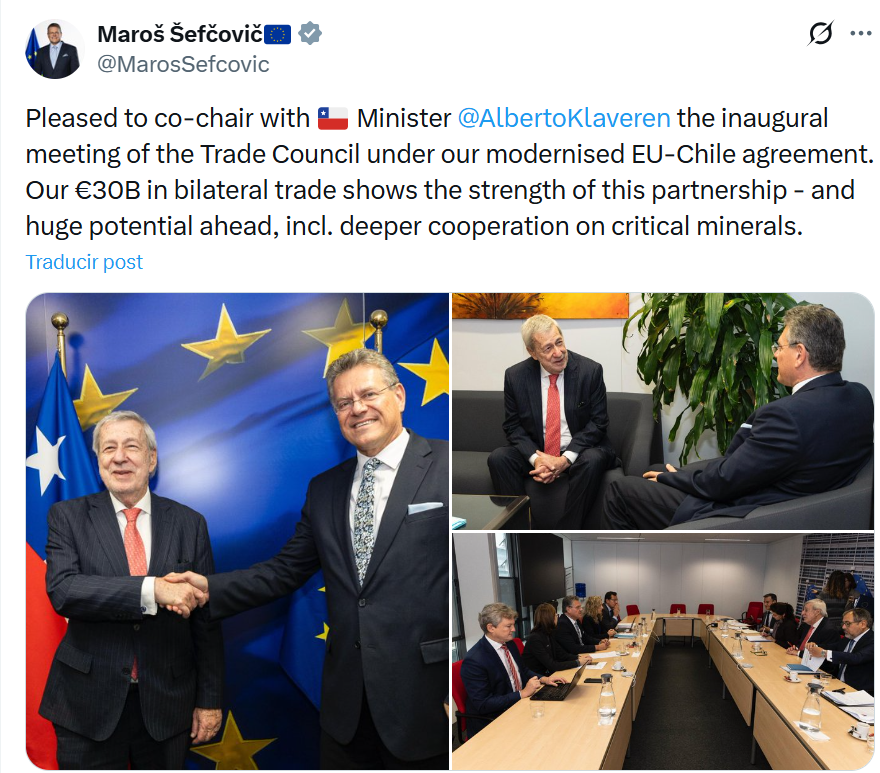
Over on X
That smile. That damned smile…
On our radar.
8–10 December | EU and Philippines will hold a mini negotiating round in Brussels to fast-track their FTA talks, aiming to close most chapters. Both sides expect negotiations to wrap up by mid-2025.
27 January 2026 | EU and India aim to conclude an ambitious FTA, defence pact and strategic agenda at their summit in New Delhi. The two sides are yet to resolve remaining issues on steel, cars and the EU’s Carbon Border Adjustment Mechanism, while having already cleared 12 of the roughly 20 chapters of the agreement.
What we are following
EU Trade Policy Day 2025. At the EU Trade Policy Day, held on November 20, discourses centred around how to revive multilateral trade and how to reach trade secularisation. Commissioner Sefčovič plans to revolutionise and deepen WTO functionality through a “coalition of the willing” and expand the MPIA workaround while preparing an Economic Security Doctrine focused on raw materials and diversification.
Kenya–EU EPA Faces Legal Hurdle as Nairobi Files Appeal. Kenya will appeal a ruling by the East Africa Court of Justice that temporarily halted implementation of its Economic Partnership Agreement with the EU. The injunction, triggered by an NGO challenge alleging incompatibility with East African Community rules, risks disrupting Kenya’s €1.5 billion in annual exports to the EU. Nairobi maintains the EPA is essential for market access and is seeking a swift decision to restore legal certainty for its traders.

Alessandro Pizzi, Public Affairs Consultant

Alí El Majjaoui, Communications Consultant

Sophia Nee, Communications Consultant