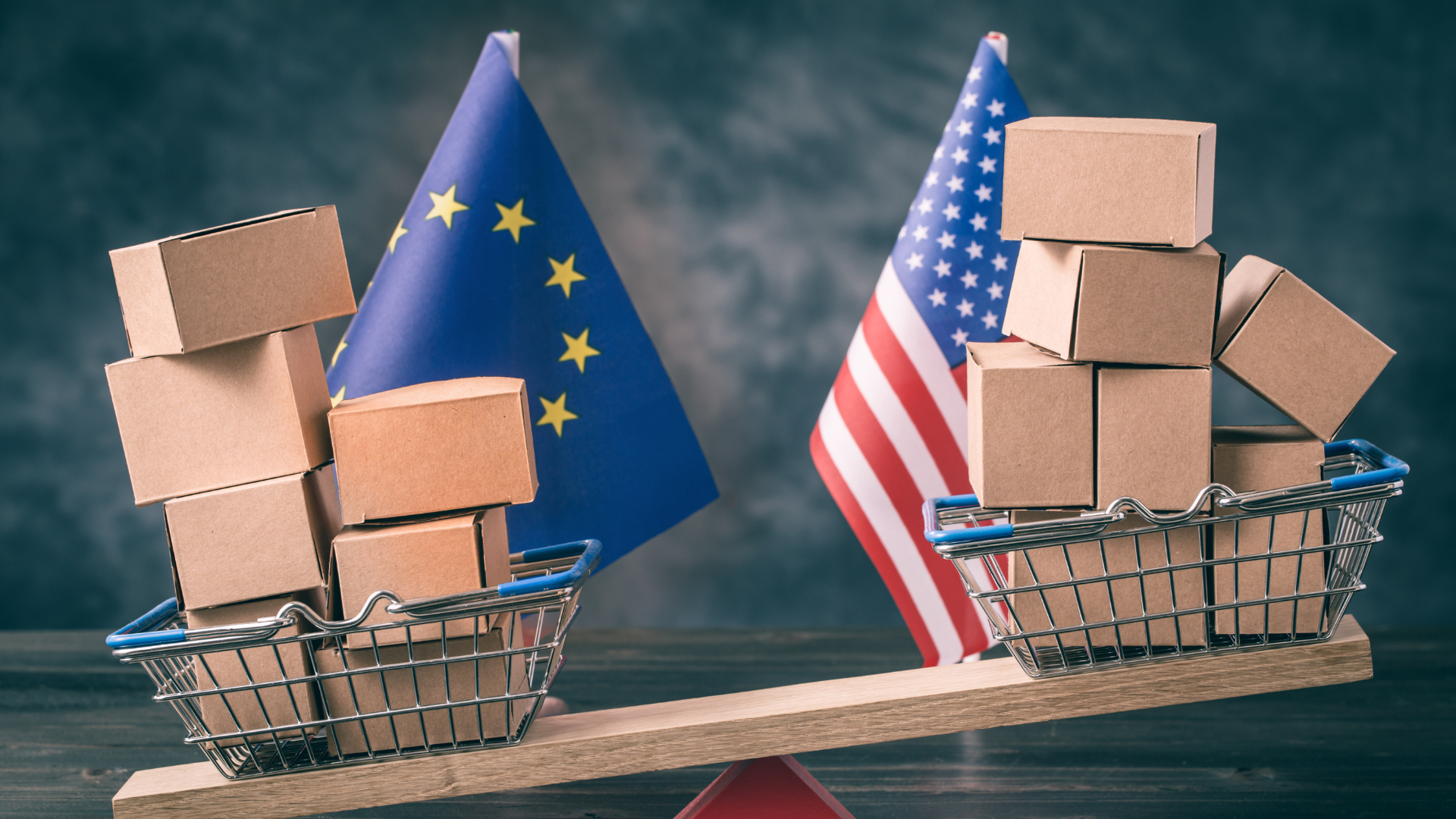
March has brought two things that Brussels hasn’t seen since last July: the first real rays of sunshine and the first real developments in the EU–US trade partnership.
With the European Parliament adopting a strong position on the EU-US deal, trilogues are set to begin, paving the way for the implementation of the framework agreed in Turnberry last year. In the background, potential new USTR tariffs and the conflict involving Iran further complicate transatlantic negotiations.
Meanwhile, the EU continues its process of trade diversification by concluding a landmark deal with Australia and deepening its presence in Mexico and Asia, as explained by our guest columnist Prof. Camille Nessel.
The treaty on which the sun never sets
After several months of negotiations, threats, and broken promises, the two sides of the Atlantic step a little closer once more, as the European Parliament announced its adoption of the Turnberry Framework.
While not exactly a textbook trade deal, the Turnberry framework still builds on shared commitments between the EU and US allies (?) regarding domestic laws governing transatlantic trade. The European Commission kick-started the implementation process through two proposals on tariffs for US imports, which the Council adopted without major amendments.
On March 26, the European Parliament voted in plenary on the two file, adopting them both with some notable amendments. The Parliament’s position envisions strong conditionality clauses such as a suspension clause in case of new US tariffs or threats against an EU Member State, a sunrise clause delaying certain tariff cuts until US commitments are met, a safeguard clause on steel and aluminum, and a sunset clause providing for the expiration of the deal on 31 March 2028.
The Parliament position comes against the backdrop of ongoing tariff threats from the US administration, which, after being forced by the Supreme Court to dismiss the previous tariff regime, is now seeking alternative ways to reinstate quotas at similar levels. In fact, President Trump imposed global duties at 10% under Section 122 of the 1974 Trade Act, threating to rise them to 15%. Moreover, the US Trade Representative launched two new investigations under Section 301 of the Trade Act against countries that harm the US through excessive industrial capacities and against countries that make use of forced labour practices. If confirmed, the two investigations may result in new tariffs. Needless to say, the EU is in scope in both…
With trilogues on the two files implementing the Turnberry framework expected to start in mid-April, negotiations are expected to be highly contested.
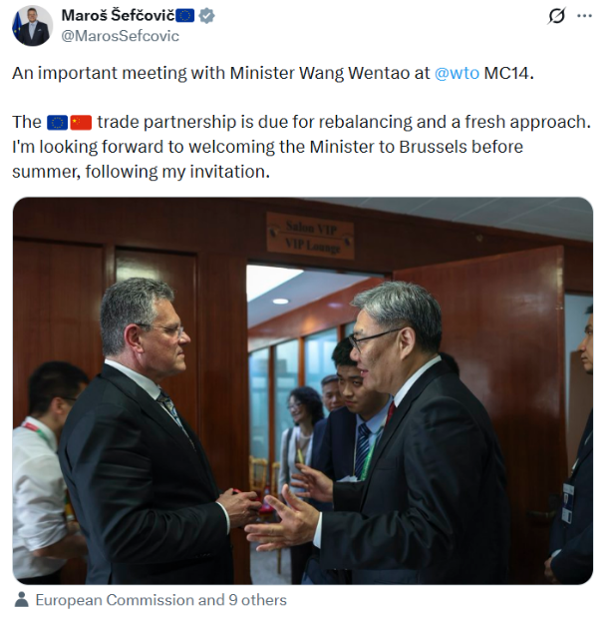
Zoom In: On X, MEP Bernd Lange celebrated the Parliament’s adoption of a strong negotiating mandate for the trilogues. Parliament’s adoption was also noted by Commissioner Maros Sefcovic, who hinted at informal discussions with USTR Jamieson Greer in Yaounde during the WTO’s 14th Ministerial Conference.
Zoom Out: The wars in Iran and Ukraine are not peripheral to this transatlantic trade tug-of-war. As Washington signals a possible scaling back of military support for Ukraine while simultaneously criticising NATO allies, including EU countries, for their limited involvement in Iran, broader geopolitical tensions are increasingly shaping the context in which the trade agreement will unfold.
Our Take: Against this backdrop of tariffs, differing positions between Parliament and the Council, and a shifting geopolitical landscape, the trilogues on the two files implementing the Turnberry framework will be worth keeping an eye on. To ensure your organisation is always up to date with the latest trade policy news, subscribe to #TradeViews and reach out to our team!
A deal down under: the EU adds Australia to its growing trade network
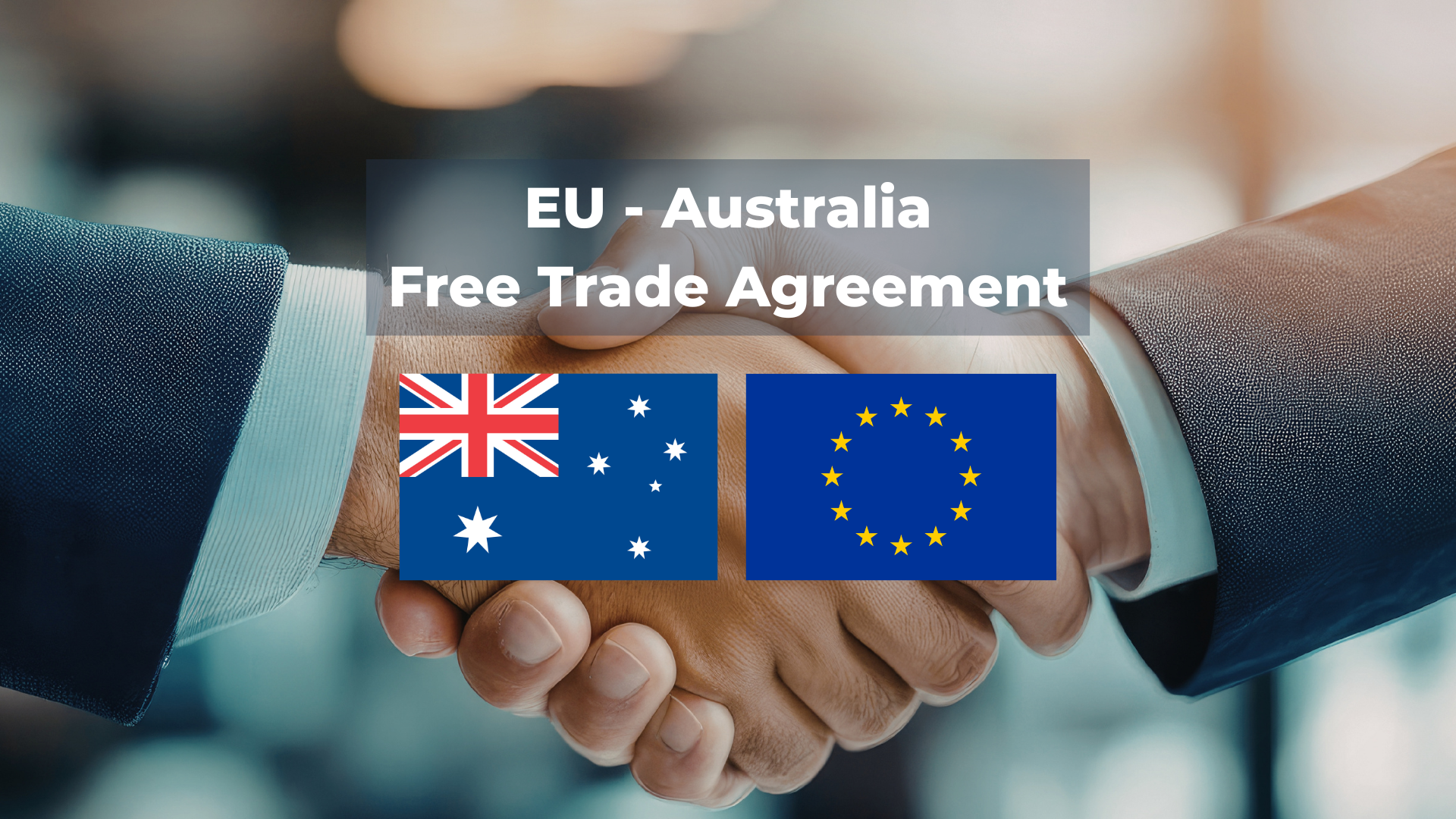
On 24 March, Australia and the European Commission announced a Free Trade Agreement. Framed as a response to global uncertainty, President von der Leyen highlighted its role in strengthening trust, security and rules-based trade. In addition to opening access to a mighty economy, the deal reinforces the EU’s presence in the Indo-Pacific and supports its push to diversify trade partnerships, as reflected in the recent agreements with Indonesia and India.
Overall, the agreement aims to deepen EU-Australia trade and investment ties by granting EU exporters greater access to the Australian market. It removes over 99% of tariffs, opens services and public procurement, facilitates data flows and access to critical raw materials, supports SME internationalisation, and boosts mobility and innovation through improved opportunities for professionals.
In agriculture, where the EU already has a positive trade balance with Australia, tariffs will be removed on key exports including, wine, cheese, meat preparations, chocolate, sugar confectionery, and certain fruits and vegetables. Nevertheless, safeguards are included to protect sensitive sectors from unforeseen market disruptions.
The deal also strengthens access to Australian critical raw materials (i.e. lithium, manganese, aluminium) by creating a more predictable market. Today, trade in CRMs is easily disrupted, making this agreement important in terms of securing and diversifying the EU’s supply chains, which will be key to Europe’s digital transition.
Finally, the agreement reinforces sustainability by encouraging greener, fairer trade, bringing imports closer to EU standards, and backing firm commitments on workers’ rights, equality, environmental protection and climate action.
Next steps: After publishing the draft, the Commission will submit the agreement to the Council for approval. Once approved, the EU and Australia can sign it. The deal will then require the European Parliament’s consent and final Council approval, before Australia ratifies it for entry into force.
Trade Voices
Between integration and risk management: the EU’s dual approach to trade in Asia

The EU’s differentiated approach to trade in Asia is not a sign of inconsistency. It reflects a deliberate choice: integrating with Southeast Asia while managing risk vis-à-vis China.
Engagement with Southeast Asia is not new. Since the 2000s, the EU has pursued trade agreements with key economies in the region, largely following business interests and growth opportunities rather than a clearly defined strategy. The initial ambition of a region-to-region agreement with ASEAN did not materialise, prompting a shift towards bilateral negotiations. What stands out is persistence. Once negotiations begin, the EU rarely withdraws. It maintains engagement across political cycles, allowing negotiations to resume and progress over time. This has enabled the EU to gradually anchor itself economically across the region and build a long-term economic presence.
At the same time, the EU has maintained demanding conditions, particularly on public procurement, which distinguishes it from other partners and shapes the pace of negotiations. Whether this approach will evolve remains uncertain, especially considering recent developments in negotiations with India, where the EU appears to have shown greater flexibility.
The more significant shift has taken place in the EU’s approach to China. For a long time, the relationship was driven by business expectations and efforts to provide a stable framework, most notably through the Comprehensive Agreement on Investment, currently on hold. This logic has lost traction. China is now viewed as a structural economic competitor with growing technological and industrial capabilities, and increasingly as a benchmark against which the EU reassesses its own economic model.
This reassessment has expanded the scope of EU trade policy. It is no longer only about market access, but about safeguarding Europe’s economic position. The EU is also making greater use of unilateral instruments and initiatives such as Global Gateway to leverage its market power and offer alternatives to Chinese engagement, particularly in strategic sectors such as infrastructure and raw materials.
This results in a differentiated but structured approach. The EU deepens integration where possible and manages risks where necessary. Whether this evolving approach can deliver remains uncertain.
Camille Nessel, EU-Asia trade expert & lecturer in EU politics
To be made in EU or not to be: the Industrial Accelerator Act question
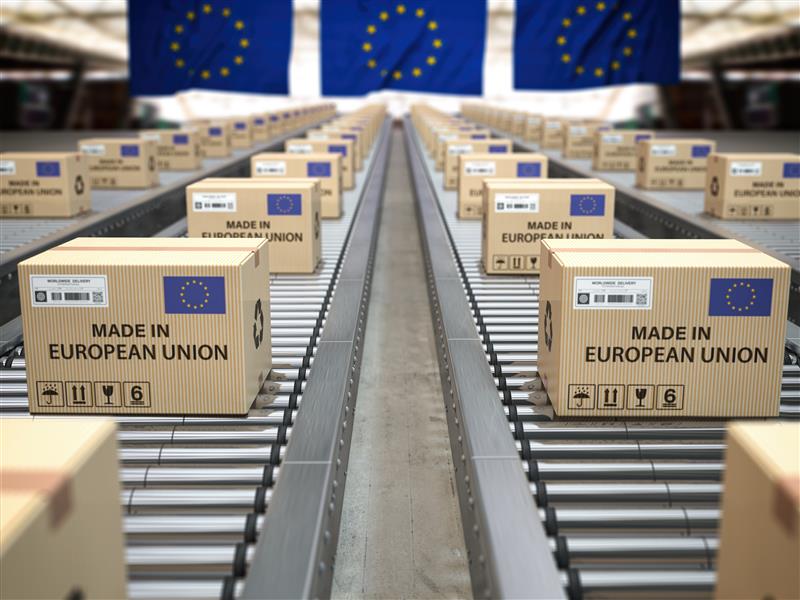
The Commission’s long-awaited Industrial Accelerator Act was finally published on 4 April after several delays, but what is in it?
Low-carbon and Made in EU requirements: The proposal introduces “Made in EU” and low-carbon requirements for public procurement and support schemes. According to the IAA, products from countries with a free trade agreement, customs union, or that are part of the Government Procurement Agreement may be treated as equivalent, although the Commission can exclude certain countries through delegated acts. These rules will apply to materials such as steel, aluminium, concrete, and mortar used in buildings, infrastructure, and vehicles.
Foreign investments: The Act also introduces a new screening mechanism for foreign investments in key strategic sectors. Investments above 100 million euros would require prior approval where a third country controls more than 40 percent of global manufacturing capacity. The sectors concerned include batteries, electric vehicles, solar technologies, and critical raw materials.
Industrial acceleration areas: Member States would also be required to designate industrial acceleration areas to support manufacturing projects, with simplified permitting and easier access to financing and innovation support.
The reactions from Member States: The Member States have already started raising their concerns regarding its complexity, the Commission’s broad discretion under the “Made in EU” rules, and potential tensions with international trade commitments. While the European Council has backed the idea of a stronger European preference in strategic sectors, it has also called for further simplification of permitting rules and additional proposals from the Commission.
If you wish to share your opinion, the Commission opened the proposal for feedback until 26 May. Meanwhile, MEP Christophe Grudler (FR, Renew), the rapporteur of the file, has also published a consultation.
The EU–Mexico deal that both sides want, and neither wants to sign (yet)
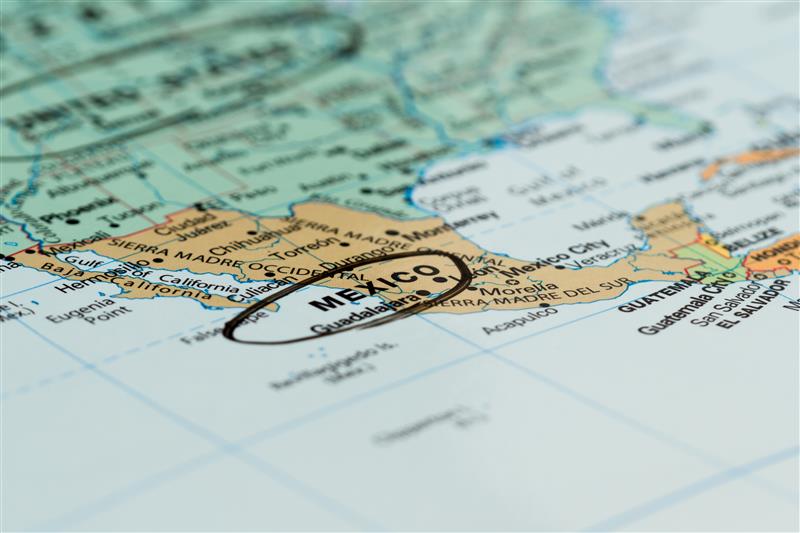
The EU–Mexico trade agreement should be straightforward. It should focus on diversifying supply chains, deepening industrial ties, and reducing overdependence. Instead, it is turning into a case study in strategic hesitation, a familiar pattern in recent trade news.
On paper, both sides win: Europe gains a manufacturing partner with strong access to the US market, and Mexico gains a way to hedge against its overwhelming reliance on the US. It all makes sense, and the agreement itself has been ready for a while; it reached the final stages of legal scrubbing and translation.
But things are a little more complicated than that.
July brings the review of the US–Mexico–Canada Agreement. At the same time, Trump is escalating trade threats more freely, floating higher tariffs, targeting specific EU member states, and injecting a general uncertainty into transatlantic trade. And this is a big deal for Mexico in particular, whose priority is managing its relationship with Washington.
That’s where the EU deal becomes tricky. Not in substance, but in signalling. A high-profile signing with European leaders just weeks before sensitive US trade talks risks being read as a positioning move.
So, caution is both understandable and strategic.
What’s interesting is that this is happening in parallel with the EU shifting its approach to EU trade: greater focus on economic security, more assertive tools, and higher emphasis on “made in EU”. The Mexico deal fits neatly into that direction.
For Europe, this is about optionality. And for Mexico, it’s about exposure.
Which leaves both sides in the same place: aligned on substance, but careful on timing, and waiting for the right moment to make it a done deal.
Over on X…
You and that guy you kind of know but aren’t quite friends with yet, three drinks deep at Plux on a Thursday, solemnly agreeing to plan a weekend trip you will absolutely never mention again.
On the radar:
1 May | Attention turns to the long-awaited rollout of the EU–Mercosur agreement, as its provisional application officially begins. This milestone unlocks immediate tariff reductions across a wide range of goods, offering early gains for exporters while sensitive sectors remain shielded through quotas and safeguards. Even as political and legal scrutiny continues in several Member States, the provisional application signals the EU’s determination to move forward with one of its most consequential trade deals in decades.
13 April (TBC) | Back in Brussels, the trilogues are expected to kick off on the EU–US trade agreement, bringing together the European Parliament, Council, and Commission to negotiate the final details of the deal. Discussions are likely to centre on safeguard mechanisms, dispute resolution, and the balance between market access and economic security concerns. As transatlantic tensions linger, the talks will be a key test of whether the EU can translate political intent into a workable legislative outcome.
What are we reading?
1 AH (After Hormuz): What happens when a single maritime artery carries a quarter of global oil trade, and then falters? According to the UN Trade and Development (UNCTAD) study Strait of Hormuz disruptions: Implications for global trade and development, the consequences ripple far beyond energy markets. Disrupted shipping flows are already driving up freight costs, insurance premiums and fuel prices, with knock-on effects across supply chains and food systems. With fertilisers and LNG also transiting the strait in large volumes, the report underscores how a regional crisis can quickly escalate into a broader trade and development shock.
Tariffs up, ties intact: A sharp rise in U.S. tariffs on European goods in 2025 might have hinted at a slowdown, but the transatlantic economy proved surprisingly resilient. According to the study, The Transatlantic Economy 2026, published by the American Chamber of Commerce to the EU, trade flows remained robust, with services growing steadily, while deeply integrated supply chains and investment ties continued to anchor the relationship.

Alessandro Pizzi, Public Affairs Consultant

Eda Zeynep Çelik, Public Affairs Trainee

Sarah Harry, Communications Consultant

Sophia Nee, Communications Consultant