Happy New Year from everyone at #TradeViews!
2026 could be the year the EU–Mercosur agreement finally comes to fruition after 25 years of negotiations. Amid rising EU–China trade tensions, the Cyprus Council Presidency has set its trade priorities straight. Finally, 2026 is shaping up to be a year in which the intersection between trade and non-trade policies takes centre stage.
EU-Mercosur: the never ending story
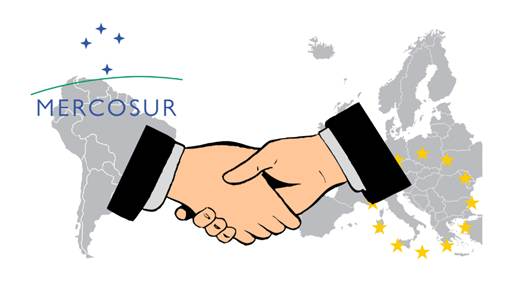
Touted as an early Christmas gift by the Commission, the EU-Mercosur deal once again faced a delay on December 19, when Italian Prime Minister Giorgia Meloni asked for more time to appease Italian farmers. Italy’s reversal came despite the Council and Parliament’s agreement to strengthen safeguards for farmers on December 17. While the postponement initially angered Brazilian President, Ignacio Lula, he eventually agreed to the delay.
The revised timetable sets final discussions among European ambassadors for January 9, when they are expected to approve and sign both the EU-Mercosur trade deal and the accompanying farmers’ safeguard measures regulation. Only then can Commission President Ursula von der Leyen proceed to sign the agreement during her trip to Paraguay on January 12.
Among member states, Poland remains highly critical of the deal, with Agriculture Minister, Stefan Krajewski, actively seeking to form a last-minute blocking minority within the Council as anti-Mercosur protests spread across the country. France remains opposed to the deal, as reiterated by President Emmanuel Macron via a post on X, as Paris prepares to introduce a decree to suspend the imports of some products – mostly coming from South America – containing residues of substances banned in Europe. Italian Prime Minister, Giorgia Meloni, has not commented on the topic yet, but is expected to ultimately back the deal, according to Bloomberg.
If concluded, the deal would then have to be approved by the European Parliament, whose members are increasingly being put under pressure by the farmer protests held in Brussels just before Christmas.
The coming weeks will be crucial for the future of EU trade, as the Mercosur file remains the largest trade agreement on Maros Sefcovic’s table, with the potential to either accelerate the EU’s trade momentum or bring it to a halt.
Our Take: Access to critical raw materials remains an essential objective for EU’s DG TRADE. According to a 2023 EU Commission study, significant quantities of critical raw materials such as nobium, silicon metal and lithium are found in Mercosur countries. This is particularly relevant in a global context marked by a steadily rising demand for critical raw materials and a growing number of export restrictions, as highlighted in a recent OECD report.
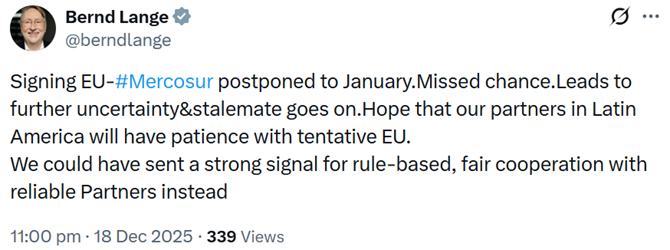
Zoom in: Commission spokesperson, Paula Pinho, said she was confident that the deal would be concluded soon. Meanwhile, MEP Bernd Lange, Chair of the INTA Committee, criticised the decision to postpone the deal and asked Mercosur partners for patience in light of the EU’s prolonged deliberations on the file.
Zoom out: Notwithstanding Brazil’s President initial ultimatum, Mercosur leaders remain cautiously optimistic about the deal. Uruguay and Paraguay’s foreign ministers highlighted the high priority of the file for their countries, while admitting frustration over the deal’s timeline. Moreover, Argentina’s foreign minister Pablo Quirno remains optimistic on the deal.
Is It Fair Play? Trade tensions between the EU and China escalate
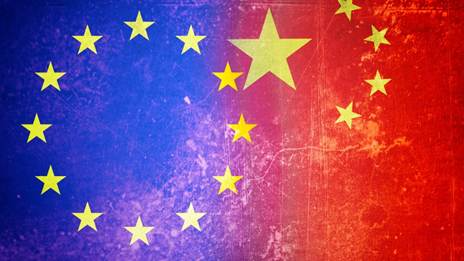
After imposing countervailing duties of up to 45 percent on Chinese EVs (2024) to address perceived market distortion, the EU has also begun calculating embedded emissions for imported cars and parts under its Carbon Border Adjustment Mechanism (CBAM) rules. When verified emissions data are unavailable, CBAM mandates the use of default carbon-intensity values for goods entering the EU market; a choice that has angered Beijing.
In addition to criticising the EU’s reliance on high CBAM default values which they see as China has also rebuked the bloc for pursuing bilateral “side deals” with individual companies, after it had confirmed it would review a request from Volkswagen to lower EV tariffs.
Beyond criticising the EU’s reliance on high CBAM default values—which China views as discriminatory against Chinese EV imports—Beijing has also rebuked the bloc for pursuing bilateral “side deals” with individual companies, following the EU’s confirmation that it would review Volkswagen’s request for lower EV tariffs.
In late December, China announced provisional anti‑dumping duties of up to 42.7 percent on EU dairy products, arguing that EU subsidies are causing “injury” to Chinese producers – a move that drew sharp criticism from Brussels and EU farm groups. The European Commission called the investigation unjustified and is now reviewing China’s preliminary findings, with conclusions due by February 21.
Overall, the EU–China dispute raises broader questions about fair play and the prospects for a truly level playing field. Both sides insist they are defending fair trade and climate ambition. Yet as CBAM adjustments, tariff decisions and company-specific measures accumulate, there is a risk that “fair competition” becomes not a shared principle but a moving target—shaped as much by strategic interests as by climate or trade objectives.
Cyprus at the helm: Navigating trade reform, steel protection and global partnerships
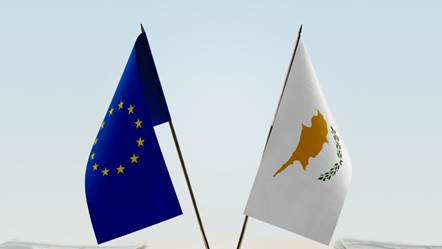
On 1 January 2026, the Republic of Cyprus assumed the Presidency of the Council of the EU. Although this is only its second term since joining the Union, Cyprus has set out an ambitious agenda at a time marked by strained transatlantic relations and an attempt to strengthen the block’s collective competitiveness. Staying true to its motto, “an autonomous Union, open to the world”, Nicosia has framed its presidency around a dual objective: reinforcing the EU’s strategic autonomy (through competitiveness) while expanding its global engagement.
On the trade front, Cyprus has two high-profile legislative files on its agenda: customs reform and new EU steel measures. Firstly, it will lead the next round of negotiations on customs reform, which aims to streamline the EU’s currently fragmented system. Key proposals include the creation of an EU-level customs authority and data hub, as well as blocking the entry of tax-free packages valued below €150. Secondly, Cyprus will steer negotiations on new steel measures, which would increase tariffs to ease pressure on European producers facing cheap imports driven by global overcapacity.
To strengthen diplomatic and economic ties and counter the impact of US tariffs under President Trump, Cyprus aims to deepen trade relations with the Middle East and explore a potential EU–India free trade zone. And, of course, we can’t forget Cyprus’ work on the ongoing contentious Mercosur trade deal.
CBAM enters into force as the EU tightens steel safeguards
The EU’s Carbon Border Adjustment Mechanism (CBAM) entered into force despite concerns from global trading partners. From January 1, importers of carbon intensive goods, such as steel, must comply with several sustainability requirements, including reporting obligations and the purchase of CBAM certificates.
China, one of the most vocal critics of CBAM, condemned the default emissions values assigned under the mechanism, arguing that they amount to “unfair and discriminatory treatment” and violate WTO rules. On the other hand, CBAM is also at the heart of current EU-India trade negotiations, whose next round of talks is scheduled to take place in Brussels on January 8 and 9.
Across the Channel, British steel manufacturers warn that CBAM and steel safeguards will divert steel flows into the United Kingdom market. In fact, the UK described them as “the biggest crisis the United Kingdom steel industry has ever faced”.
As CBAM raises the stakes for imports, the EU is simultaneously strengthening its steel safeguard regime. During its mandate, the Danish Presidency of the Council adopted its position on the new steel safeguards remaining broadly aligned with the Commission’s proposal of having tariff-free steel imports capped at 18.3 million tonnes, with volumes above that threshold facing a 50 percent duty.
The Council also calls for greater flexibility by allowing unused tariff-free quotas to roll over from one quarter to the next within the same year, while limiting the Commission’s ability to adjust the measures. The proposal provides for a possible expansion to be assessed within 18 months, followed by a full review after four years.
Interinstitutional talks will begin once the European Parliament adopts its position, with the file currently being discussed in the INTA Committee.
Digital Trade: The next battleground

2025 underscored the critical importance that digital trade plays in the transatlantic partnership. It also signaled the start of a digital trade dispute between the EU and the United States — one that is likely to continue into 2026.
The decision by the Commission to sanction Elon Musk’s X under the Digital Services Act, triggered a confrontation in which Washington sought to bargain tariffs on steel and aluminum against Brussels’ digital regulations. As tensions escalated, Trump’s administration decided to impose a travel ban on EU’s former Internal Market Commissioner, Thierry Breton, seen as the father of the Digital Services Act. This decision was immediately condemned by the European Commission.
In the year ahead, the interplay between technology regulation and trade policy will be pivotal to the EU’s international partnerships, beginning with the EU–US relationship. To avoid missing out, follow #TradeViews to stay informed on the latest trade news.
Over on X
Someone is clearly unhappy…
On our radar.
January 8-9 | India’s Minister of Commerce and Industry, Piyush Goyal, will be in Brussels where he will meet with DG TRADE Commissioner Maroš Šefčovič for the 17th round of the EU-India Free Trade Agreement negotiations. The two sides are currently trying to narrow down their differences on sustainability requirements for trade, as imposed by files such as CBAM and EUDR.
January 19-23 | The World Economic Forum will hold the 2026 World Economic Forum Annual Meeting in Davos-Klosters, bringing together global leaders to discuss trade, economic growth, and geopolitical cooperation in a fragmented global environment.
What we are reading
The EU’s Trade Annus Horribilis. Despite modest overall growth in global goods flows, Europe was caught in the crossfire of rising US tariffs and a renewed surge in Chinese exports. According to trade trackers, US tariffs, the influx of Chinese products, and growing support for protectionist measures have underscored the bloc’s trade vulnerabilities and are forcing Brussels to rethink its trade strategy in 2026.
Minimum Tax, Maximum Exceptions. After months of negotiations and pressure from Washington, the OECD agreed on changes to the global minimum corporate tax that would exempt US-based multinationals from parts of the 15% levy. According to the Financial Times, the deal, backed by more than 145 countries, highlights growing tensions over tax competition and raises fresh questions about the durability of global coordination on corporate taxation.

Alessandro Pizzi, Public Affairs Consultant

Sophia Nee, Communications Consultant

Eda Zeynep Çelik, Public Affairs Trainee

Sarah Harry, Communications Consultant