Spend five minutes in the EU bubble and you’ll hear the holy trinity: AI, chips, sovereignty and European competitiveness.
Panels, position papers, breakfast debates, all powered by coffee and artificial intelligence — the unstoppable force of Brussels enthusiasm. The usual suspects dominate the stage: Big Tech, digital platforms, chip alliances, cybersecurity strategists. Microphones are plentiful. So are buzzwords.
Meanwhile, something far less flashy, but far more essential, is flowing silently beneath our feet.
Ahead of World Water Day on 20 March, here’s a gentle provocation:
What if one of Europe’s most strategic tech sectors isn’t generative AI… but water microbiology?
Behind every glass of tap water is a system designed to detect invisible biological risks, bacteria, pathogens, microbial contamination — before they ever become headlines. And yet, in tech conversations, microbiology is sometimes treated like a legacy topic. Important, yes, but hardly exciting. Almost a kind of regulatory relic. A polite nod to what we might jokingly call #VintagePollutants.
But here’s the twist: there is nothing vintage about it.
Modern microbiological monitoring is no longer about someone peering into a microscope for hours. Today’s systems are automated, quantitative and increasingly digital. Detection methods are standardised, traceable and faster than ever. What once took days can now deliver results far more quickly, allowing well-informed decisions, quicker containment and fewer human errors.
So, water safety isn’t magic. It’s microbiology. And it doesn’t stop at the lab.
Mobile and field-deployable testing units are now used during major sporting events, in rivers under environmental stress, and in emergency situations after floods or suspected contamination. Microbiological monitoring has essentially become part of Europe’s resilience infrastructure.
Today, “strategic autonomy” is the phrase of choice, but perhaps we should remember that autonomy also means secure water systems. And resilience is not only about data centres and energy grids, but also about ensuring that climate stress, extreme weather and rising temperatures do not compromise public health.
Here’s another slightly provocative thought for the EU bubble: the upcoming discussions around the Water Framework Directive could also become an opportunity to better align and coordinate microbiological monitoring across Europe’s different water legislation, from drinking water to bathing waters and beyond.
Innovation isn’t only about algorithms writing speeches or powering chatbots.
Sometimes, it’s about making sure you can turn on the tap in Brussels, or anywhere in Europe, without hesitation.
If Europe truly wants to lead in tech, maybe it’s time to widen the spotlight.
Some of the most consequential innovations don’t sit in the cloud.
They run through our pipes.
About this week’s guest editor, Claudia Topalli.
Claudia Topalli is a Brussels-based expert in water policy and microbiological water quality. She works at the intersection of technology, public health and European regulatory frameworks.
With extensive experience in policy association management and a background spanning the European Commission, environmental policy and political media, she brings a cross-sector perspective to innovation, governance and strategic resilience.
Love reading out-of-the-Brussels-bubble tech news? Share it with your friends and colleagues. They can subscribe here. Ideas? Suggestions? Comments? Send them our way!
#TechAways is brought to you by SEC Newgate EU’s one and only #tech team featuring Camilla Frison, Sarah Harry, Tim Edgar and Ali El Majjaoui.
OpenAI hardware lead steps down over Pentagon deal 🤖 [TechCrunch]
A senior OpenAI executive has resigned after the company’s recent agreement allowing its AI systems to be used in classified Pentagon environments. Caitlin Kalinowski, who led OpenAI’s hardware team, said the decision came down to governance concerns rather than opposition to national security uses of AI.

In a post announcing her departure, she argued that questions around domestic surveillance and autonomous weapons required clearer guardrails before such a deal was announced. OpenAI maintains the agreement includes strict red lines, including prohibitions on domestic surveillance and autonomous weapons. However, the vague nature of the deal has created unease among consumers, with ChatGPT uninstalls surging by 295% after the Pentagon deal. As AI begins to be integrated into government systems, companies are being pushed to define the limits of responsible use, including how internal disagreement is handled.
Does responsible mean pro-human? Experts seem to think so 🤔 💡 [TechCrunch]
A growing coalition of experts is pushing for clearer rules on AI development.

The Pro-Human AI Declaration is backed by hundreds of researchers, former officials and public figures. It was coordinated by researchers including MIT physicist Max Tegmark and argues that current governance frameworks are struggling to keep up with technological progress. As AI systems continue to scale rapidly, the declaration proposes stronger accountability for developers, mandatory safety testing before deployment and clearer checkpoints to ensure humans remain in control of these widely used systems. The initiative arrives at a particularly relevant moment, while as tensions grow around the use of AI in defence and national security (see the story above on OpenAI and the Pentagon). Still, even with broad agreement on the need for guardrails, a key question remains: who decides the limits of AI development?
Cyber warfare has a new frontline: hackable security cameras ⚔️ 🎥 [Wired]
Public security cameras are increasingly being drawn into modern conflicts. New findings suggest that state-linked hackers have attempted to access hundreds of internet-connected cameras in conflict zones, using them to monitor potential targets and assess the impact of missile or drone strikes.
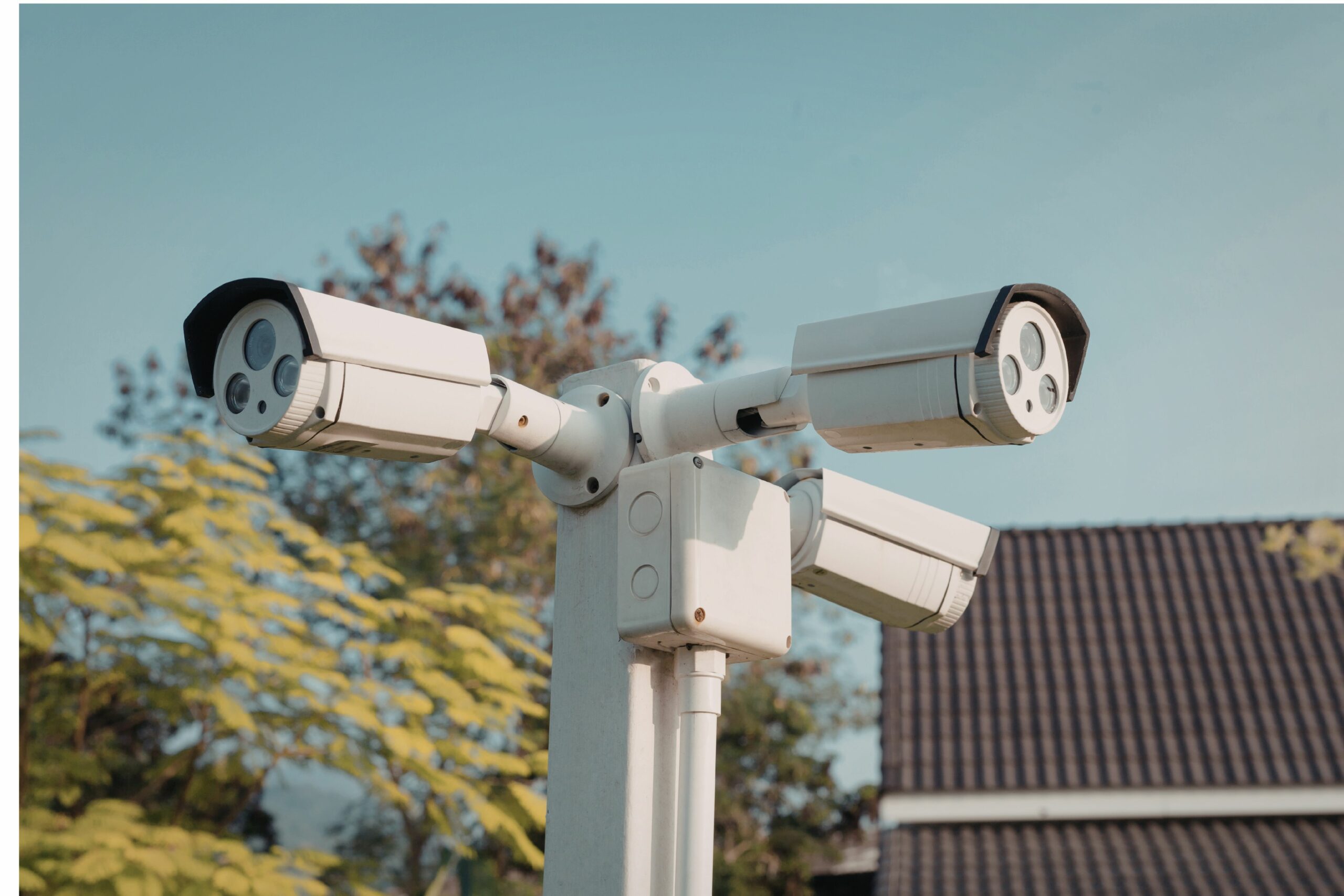
The practice has reportedly appeared in multiple conflicts, including those involving Iran, Israel, Russia and Ukraine. Because many consumer cameras are poorly secured and widely used in public-facing spaces, they can offer an unexpected source of real-time intelligence and surveillance.
The hidden thirst of artificial intelligence 🤖💧[CNET]
How much water is used when you ask a generative AI a simple question? Even posing that query has a footprint, as it requires electricity, cooling systems and, inevitably, water. Exactly how much remains unclear. Most AI companies operate with closed systems and treat such details as closely guarded secrets.
What we do know offers a hint of the scale. Data centres accounted for around 1.5 per cent of global electricity consumption in 2024, and that share is expected to grow by roughly 15 per cent each year until 2030, according to the International Energy Agency.
More than 230 environmental groups are urging American authorities to halt the rapid expansion of energy-hungry facilities.
Their concerns are straightforward enough. These vast buildings full of servers generate planet-warming emissions, consume enormous quantities of water for cooling, and place additional pressure on electricity grids.
Consumers are noticing that in their bills, too. In a recent report, Goldman Sachs warned that electricity demand driven by AI is already pushing prices upward, contributing to a 6.9 per cent rise in the United States last year.

Meanwhile, Sam Altman, OpenAI boss, attempted to put his AI’s energy appetite into perspective, comparing it with the amount of energy required by humans to do the same tasks: “It takes about 20 years of life – and all the food you consume during that time – before you become smart.” The remark did little to reassure critics. Online, many labelled the comparison faintly dystopian, if not entirely beside the point.
In case you haven’t had enough:
- ChatGPT uninstalls surged by 295% after DoD deal [TechCrunch]
- The War on Iran Puts Global Chip Supplies and AI Expansion at Risk [Wired]
- The Future of Iran’s Internet Is More Uncertain Than Ever [Wired]
Policy pixels
Water infrastructure enters the cybersecurity spotlight: If this week’s main story has you thinking of water technology as a strategic sector, Brussels’ regulators are already a few steps ahead — at least on security.
As of 2026, the EU’s NIS2 Directive classifies drinking water and wastewater services as critical infrastructure, alongside energy, transport, healthcare and digital networks. That means utilities must implement cybersecurity risk management, incident reporting and board-level accountability, including potential personal liability for directors who fall short.
Implementation, however, remains fragmented across the EU. Member states were required to transpose NIS2 by October 2024, but by early 2026 the European Commission had already launched infringement procedures against several countries for missing the deadline. As water systems become increasingly digital, with smart sensors, automated monitoring and SCADA systems now commonplace, the sector is becoming a new front line in the EU’s critical infrastructure security agenda.
Coming up:
- The Critical Entities Resilience Directive now includes the water sector, requiring operators to conduct risk assessments, develop contingency plans and strengthen operational resilience. At the same time, investment is following the policy shift.
- The European Investment Bank has committed €15 billion for 2025–2027 to support water resilience projects, with digitalisation and AI identified as priorities meant to support enhanced monitoring systems and predictive modelling for droughts and floods.
- The European Commission is also preparing an EU-wide Action Plan on digitalisation in the water sector, expected to focus on deploying digital tools through funding and knowledge-sharing while encouraging member states to develop interoperable water data platforms.
- World Water Day on 20 March is a useful moment to note that the conversation about water and technology in Brussels is not only environmental — it is also about resilience, security and sovereignty. Language the EU bubble understands very well.
Pop-tech pick
The Capture (2019)
Quick synopsis:
This three-season British thriller starts with a soldier accused of a crime caught on CCTV. But later, the investigators realise the footage may have been manipulated. As the case unfolds, it uncovers a secret surveillance programme capable of altering live video feeds in real time. It’s a chilling show that makes you wonder: what do we do now?
What’s so special about it?
The Capture taps into a very current and relevant tension: the growing power of surveillance systems and the difficulty of trusting the data they produce. Our world is shaped by cameras, sensors and algorithmic monitoring, and this series explores how easily those systems can be manipulated. Technology designed to observe human reality can start creating it instead.

Sarah Harry, Communications Consultant

Camilla Frison, Media Relations Consultant

Tim Edgar, Senior Adviser

Alí El Majjaoui, Communications Consultant