Servus, TechAways readers!
I’m Claudia, Digital Transformation Lead at the European association representing the aerospace, defence and security industries.
This month, I have the pleasure of stepping in as your guest editor and sharing a few thoughts on a topic that’s part of my everyday work and increasingly central to the future of European defence: digital transformation.
When I first stepped into this field, “digital” in defence felt like a niche topic. Today, it’s a defining subject. Technology, especially artificial intelligence, is evolving faster than ever. It’s changing how we communicate, travel, shop and yes, how we protect and defend.
Most people know AI for its neat tricks, tidying up emails (guilty) or planning your holiday routes (also guilty), but its role in defence goes far beyond the headlines.
It can help militaries work smarter, move quicker and operate more safely. It can highlight details in satellite images that the human eye might overlook, sift through radio signals in seconds instead of hours, and support critical decision-making, always with humans firmly in the driver’s seat.
In simple terms, AI helps defence systems find information quickly by collecting and processing huge amounts of data. It helps make sense of that information, giving a clearer picture of what’s happening. And it supports faster, better-informed decisions, but not without human oversight.
On their own, each of these is valuable. But when they’re combined, the effect is far greater than the sum of the parts. That’s when AI really shifts the needle.
Digital transformation has stepped out of the buzzword stage. It’s real, and it’s happening today. In industry, in policy, and even in the systems built to keep Europe secure. What matters is that we shape it with values, transparency and strong partnerships with nations who share them.
And with that, let’s get into what’s been shaping tech this month. Over to the SEC Newgate EU team.
Claudia
About this week’s guest editor, Claudia Gherman.
With over a decade in European public affairs, I’ve found my place at the crossroads of digital policy, defence and security. In my current role, I built our digital transformation agenda from the ground up and now help steer initiatives shaping Europe’s digital defence ecosystem. In 2024, I even stepped briefly into electoral politics by running for the Romanian Senate, an eye-opening experience, to say the least. And the phrase I use most? “There’s a scene in Seinfeld about that.”
Love reading out-of-the-Brussels-bubble tech news? Share it with your friends and colleagues. They can subscribe here. Ideas? Suggestions? Comments? Send them our way!
#TechAways is brought to you by SEC Newgate EU’s one and only #tech team featuring Camilla Frison, Dániel Kovács, Sarah Harry and Ali El Majjaoui.
Bot Burnham: can AI do stand-up comedy? 🤖 [The Guardian]
Fears of deadly AI may seem premature for now, but androids could soon start killing – up on stage. At the University of Melbourne, Dr. Robert Walton has received a grant of $500,000 to train robots in stand-up comedy. His ensemble of 10 fun-droid apprentices will, for now, start with physical comedy – namely non-verbal communication fundamentals like timing, reading the room, and connecting with an audience – but could potentially also add voices later if all goes well. 
BUT – aspiring future comedians – don’t despair! Walton reassures that his fun-tomatons are not here to take over your jobs. Rather, the purpose of the study is to explore whether believable comedy could be taught to robots, with implications on how machines might use and understand humour, manipulation and interactions with humans. The research fellow believes that the gained knowledge and techniques developed could prove helpful in other areas, like “care robots”, who could learn to judge situations to be able to say the right thing to reassure or cheer people up. Let the automated hilarity begin!
Racing championship tech could soon power your car 🔋 [BBC]
The Formula 1 season may have just ended, but racing enthusiasts can already keep their cravings satisfied as the latest season of Formula E, the all-electric single seater world championship, launched last weekend. The current crop of cars are already nearing the speed of their Formula 1 counterparts, and the upcoming next generation will be even closer. 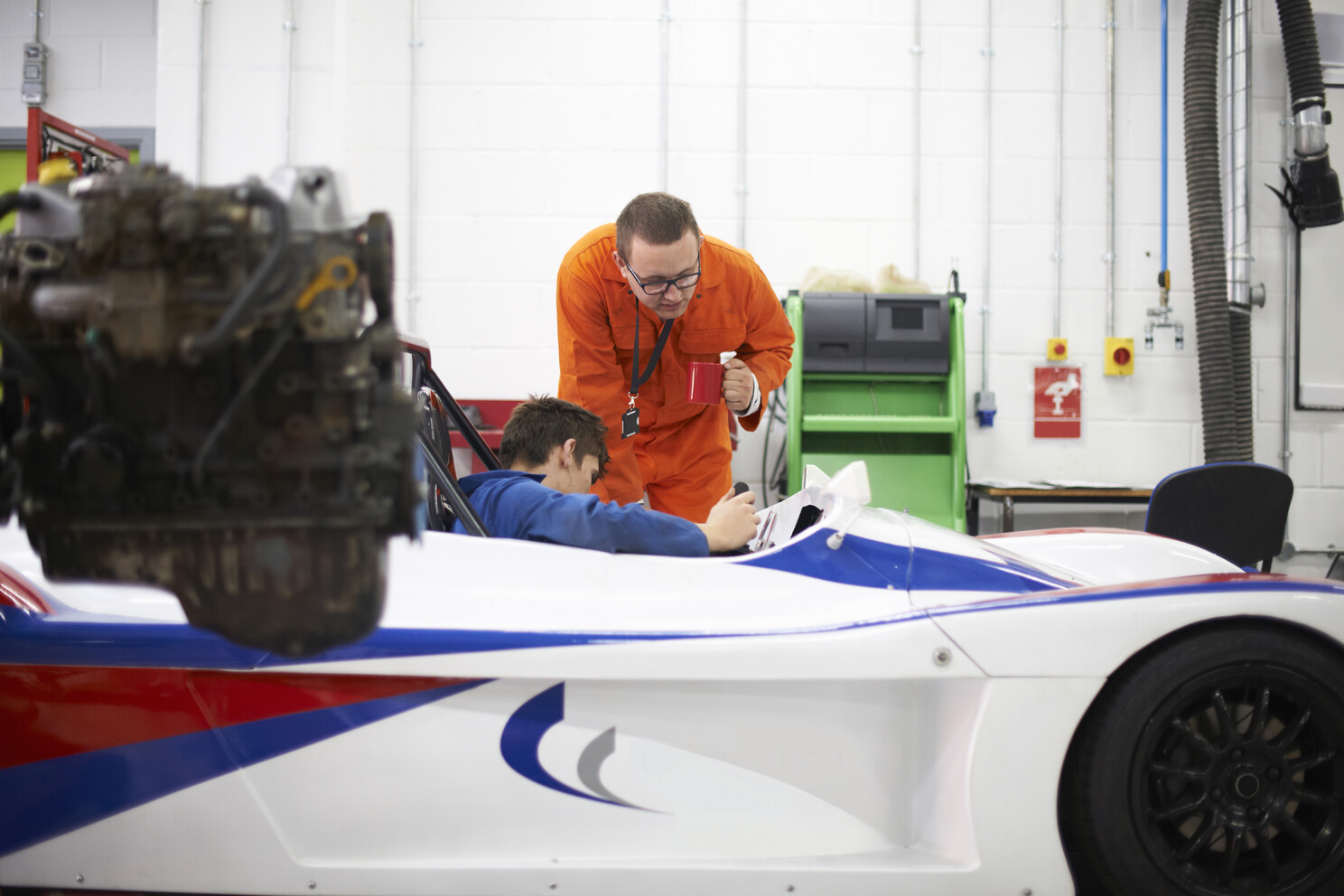
But this is more than just a playground for the eco-friendly speed demons and non-petrol-petrolheads. The lessons learned in Formula E are often brought over into the development of conventional electric cars, cutting emissions and driving the EV revolution. As Beth Paretta, VP of sporting for Formula E, says, ”the racetrack is a laboratory”. Of particular mechanical wonder are the batteries – they must be able to both store sufficient energy and release it quickly and flexibly. Moreover, the cars generate energy and recharge the battery when braking. Advancements in this field will also naturally be of great interest for road electric vehicles, where range has traditionally been a number one concern. It is no wonder that many major car manufacturers are or were involved in the sport – Audi, Citroën, Mercedes, Nissan and Porsche just to name a few.
Simply put, you might find the technology carrying today’s Formula E speedsters in your car in just a few years’ time.
Good news, AI is not a political master manipulator yet🙂 [Ars Technica]
A major new study suggests AI chatbots are far less politically persuasive than many fear. Researchers tested 19 models, including ChatGPT, Grok and other open-source systems, on 707 political issues with nearly 80,000 participants in the UK. On average, the bots shifted opinions by 9.4 per cent, compared with about 6 per cent for traditional political adverts. ChatGPT-4o was the most persuasive at nearly 12 per cent. Scale mattered less than training, as smaller models fine-tuned on persuasive dialogue matched top systems while running on a laptop. Giving bots personal data such as age, gender or political views barely increased their influence. Using facts and evidence worked better than psychological tactics like moral reframing. However, when the models were pushed to sound more factual, they also became more inaccurate. The wider concern may not be election interference, but the growing risk of cheap, accessible tools being used for fraud and manipulation.
When AI slop starts passing as science 📉 [The Guardian]
A major concern is growing in academia: AI-generated research papers are flooding conferences and journals, creating what’s being called a “slop problem”. Software like Algoverse, whose founder Kevin Zhu claims producing over 100 top conference papers cited by Google, MIT, and Stanford, are allowing students to skip the critical reading, reasoning and writing skills that academia is built on. As a byproduct, papers are being published that look polished but lack substance. Thus, creating a generation of researchers who aren’t actually developing the skills they claim to have, while reinforcing our wider obsession with productivity at all costs.
When AI becomes the shortcut into jobs, degrees and opportunities, we risk rewarding underdeveloped skills, chipping away at academic standards, and cementing the misconception that quantity matters more than quality and output more than understanding.
SOS: cyber war, sea view 🚨[Euronews]
Greece has found itself on the digital frontline of the East-West cyber showdown, whether it asked for the job or not, according to the head of its National Cyber Security Authority. Its position on Europe’s southeastern border exposes it to different threats from those faced by northern countries such as the Baltics. While Greece is not experiencing physical sabotage or infrastructure attacks, cybercrime, online activism and espionage are rising rapidly, partly driven by artificial intelligence. Athens also faces pressure from a neighbour to the east, a risk it feels is not always fully recognised by its European partners. Greece argues that neutrality in the digital conflict is no longer possible and that cyber security must now be treated as essential to national defence. The war is not coming. It is already buffering.

In case you haven’t had enough:
Websites are responsible for third-party ads meeting privacy rules, court rules [EURACTIV]
Don’t use ‘admin’: UK’s top 20 most-used passwords revealed as scams soar [The Guardian]
Meet Alpha: The humanoid robot that learned to walk in 48 hours [euronews]
Pop-Tech Pick
This month, we’re spotlighting the new season of Black Mirror, Charlie Brooker’s acclaimed anthology series, now returning to the sharp, story-driven form that defined its early success.
Quick synopsis: Black Mirror is a science-fiction anthology rooted in techno-paranoia, with each self-contained episode using speculative fiction to expose the dark, satirical, and often bleak consequences of emerging technologies on human nature and society.
What’s so special about it? The series continues to deliver incisive, thought-provoking explorations of our technological future. Its themes span everything from social-media scoring systems and memory-altering implants to simulated realities and artificial intelligence.

Alí El Majjaoui, Communications Consultant

Camilla Frison, Media Relations Consultant

Sarah Harry, Communications Consultant