On 20 February, albeit only for a few hours, most of the US global tariffs were deemed illegal. In what has been described as a “dumb and internationally divisive decision” by President Trump, the US Supreme Court found that he had exceeded his authority under the International Emergency Powers Act (IEEPA) when imposing the global “Liberation Day” tariffs on 2 April 2025. The Court highlighted that IEEPA does not allow the President of the United States to introduce unilateral tariffs without the Congress’ approval, given the current economic circumstances.
President Trump and the US Supreme Court arm-wrestle over tariffs
The relief for partners and businesses, however, was short-lived. Just a few hours after the Supreme Court judgement, President Trump signed an executive order imposing 10% global tariffs on all foreign goods entering the United States and floated the possibility of raising the tariff cap up to 15% through a Truth social post.
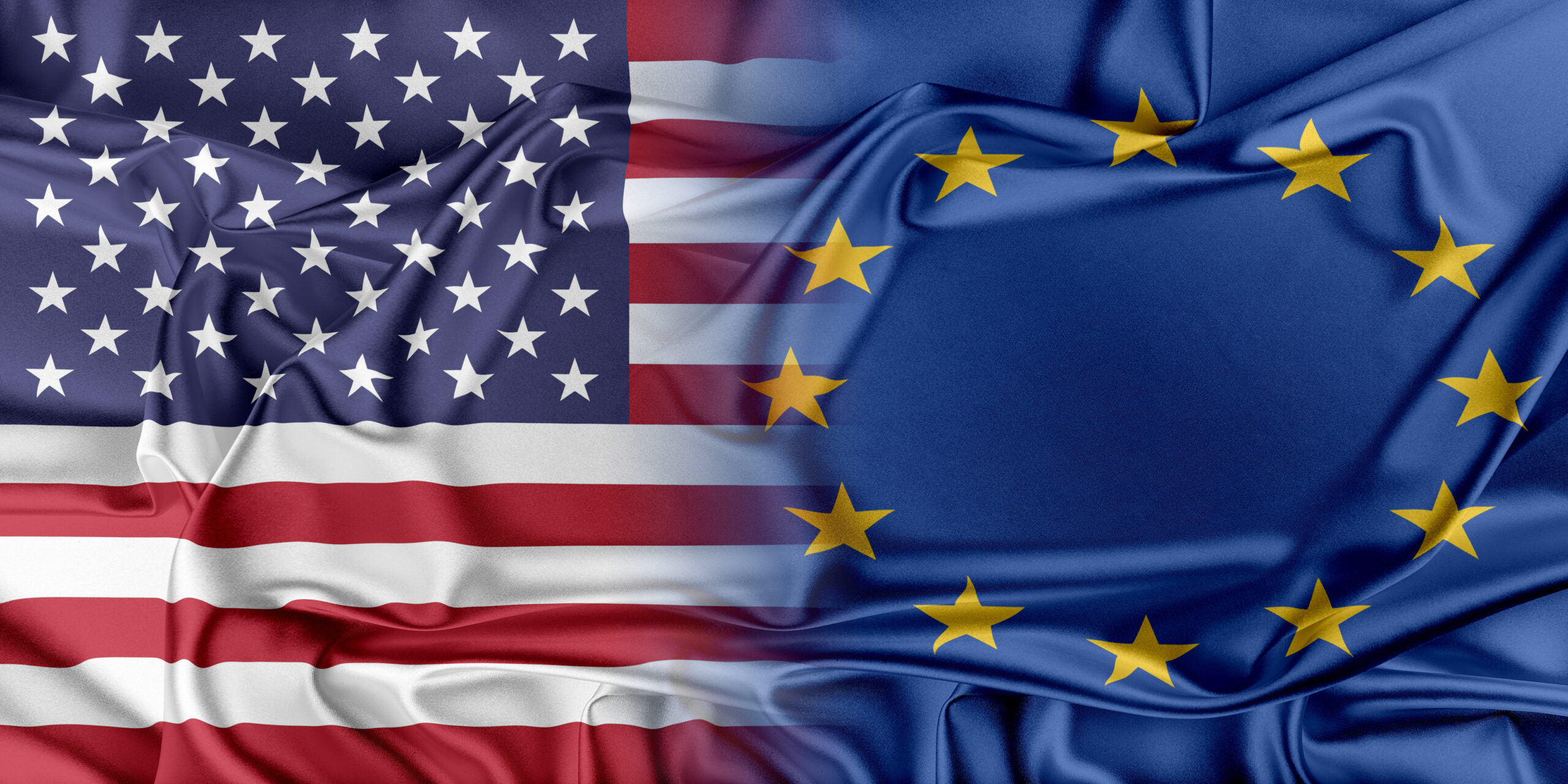
To avoid the repercussions of the Supreme Court’s ruling, President Trump announced the new 10% tariffs based on Section 122 of the Trade Act of 1974, which allows for tariffs to remain in force for up to 150 days before being subject to a vote in Congress.
Brussels was quick to respond to yet another transatlantic trade distress. The Commission published a strongly worded statement over the weekend requesting clarity on the steps the US administration intends to take and reaffirming that the EU is committed to working towards lowering tariffs, as provided for in the Turnberry agreement. Meanwhile, the European Parliament International Trade Committee indefinitely halted its vote on the implementation of the EU-US trade agreement. However, Chair Bernd Lange did not rule out a plenary vote in March, which still remains on the draft agenda.
Zoom in: According to a statement published by the European Parliament’s Committee on International Trade, the vote on the implementation of the EU–US trade deal was put on hold, among other reasons, due to uncertainty about the relationship between President Trump’s new tariffs and the Most Favoured Nation tariffs, as the possible cumulative application of the two would fall outside the scope agreed in July.
Zoom Out: According to data published by the U.S. Census Bureau, the EU was the partner with which the United States recorded its largest goods trade deficit in 2025, reaching $218.8 billion.
Our Take: While the Trump administration may seek to impose new tariffs under different provisions, such as Sections 122 and 301 of the Trade Act of 1974, the U.S. Supreme Court’s decision to invalidate the Liberation Day tariffs is an important signal of the strength and endurance of American democracy.
Prime cuts: EU-Australia Trade Deal Negotiations

On 12 and 13 February, Trade Commissioner Maroš Šefčovič and Agriculture Commissioner Christophe Hansen met Australian Trade Minister Don Farrell in Brussels to discuss reviving the long-stalled EU Australia Free Trade Agreement. Negotiations, launched in 2018, were suspended in October 2023 after fifteen rounds of talks, with both sides accusing the other of refusing to compromise. Canberra argued that the EU had not offered sufficient access for beef, lamb, dairy, and sugar exports, while Brussels defended its sensitive agricultural market. Nevertheless, following the revival of the negotiations, the Commission described the latest meeting as constructive and said both sides had moved closer on several issues.
Not much, however, appears to have changed. Market access for Australian agricultural products, particularly beef and lamb quotas, remains the central obstacle. Other sticking points include access to critical raw materials, Australia’s luxury car tax, and the protection of European geographical indications such as Champagne, Feta, and Parmesan.
Australia’s National Farmers Federation, which played a prominent role in the 2023 breakdown, has made clear that it will not accept what it calls a bad deal. The group has also pointed to the EU Mercosur agreement and the substantial financial support available to European farmers, including funds from the EU budget and emergency reserves.
Although President von der Leyen’s planned visit to Australia to conclude the deal was cancelled, contacts have continued. Following a video call with Minister Farrell, Commissioner Šefčovič confirmed that work on the agreement is ongoing.
The question now is straightforward: will the EU soften its stance on quotas for beef, lamb, and sugar, and will Australia agree to stop labelling its cheese as “Parmigiano Reggiano”?
The Art of Geopolitical Trade in the EU

February made one thing clear: EU trade policy is operating firmly in geopolitical territory.
From 16–18 February, a European Parliament delegation led by Bernd Lange travelled to the Philippines to advance negotiations on an EU–Philippines Free Trade Agreement. The ambition is to conclude an agreement this year. Beyond market access, though, the visit signalled something broader: in the Indo-Pacific, trade agreements are made as strategic anchors. For the EU, strengthening ties with Manila supports diversification, supply chain resilience and a continued commitment to rules-based trade, all while discussions on WTO reform continue.
Also in the background, EU–UAE ties are moving from exploratory to strategic. After the fifth round of trade negotiations in Dubai, the talks are increasingly framed more as part of Europe’s broader geopolitical ambitions. With Chancellor Friedrich Merz touring the Gulf and signalling the need to shift away from U.S. and Chinese dependencies, energy security sits at the core of the issue, right next to defence and industrial cooperation. The negotiations, led by Léon Delvaux (EU), reflect what Merz described as a new epoch of “great power politics” where trade policy is becoming a proponent for strategic alignment despite human rights concerns continuing to shadow the partnership.
Meanwhile, on 1 February, the EU–Singapore Digital Trade Agreement entered into force as the EU’s first stand-alone bilateral digital trade accord. By setting clear rules on data flows, electronic transactions and consumer protection, it strengthens competitiveness while preserving regulatory space. As digital trade gains popularity, it shows us its central role in economic security.
These strands all came together at the EU Trade Ministers’ meeting in Nicosia on 18–19 February. Trade policy now sits at an intersection facing market resilience, accessibility and geopolitics. And Europe’s challenge will be to deliver agreements that reflect all three.
EU-Mercosur: Moving Toward Provisional Application Amid Legal Review

On 27 February, Commission President Ursula von der Leyen announced that the EU intends to provisionally implement the EU-Mercosur trade agreement, even though it has not been formally approved by the European Parliament. MEPs have referred the deal to the Court of Justice of the European Union for review. According to President von der Leyen, early provisional application is necessary to secure a first-mover advantage. French President Emmanuel Macron reacted sharply, calling the move “a surprise, and an unpleasant one”.
Reactions within the Parliament have been divided. Bernd Lange, Chair of the International Trade Committee, welcomed the announcement. On the other hand, Dutch EPP MEP Jessika van Leeuwen asserted that the European Commission is violating the rule of law by provisionally applying the Mercosur agreement.
Before the application begins, Uruguay and Argentina, both of which have ratified the deal, will need to formally notify the EU of the completion of their internal procedures. Meanwhile, the European Commission must establish the implementing regulation governing the administration of the tariff rate quotas.
Over on X…
Bernd Lange is speaking for all of us right now.

On Our Radar
March 10 | Plenary vote on the implementation of the EU-US trade agreement
March 25 | The city that will host the EU’s Customs Authority (EUCA) will be announced
March 26-29 | 14th WTO Ministerial Conference
What We Are Reading
Relearning the Language of Power. In its new report, Relearning the Language of Power, Geostrategic Europe argues that as the global order fragments, the EU risks being shaped by others unless it leverages its own geoeconomic strengths. Based on trade data, the report calls for Europe to go beyond resilience and de-risking, building coalitions around shared priorities such as decarbonisation and energy security to help shape a renewed rules-based order beyond the WTO.
English-First Trade Deals? In a recent POLITICO article, the European Commission is reported to be floating an “accelerated procedure” that would allow political approval of trade agreements based on the English version alone, before translation into all 24 EU languages is finalised. Aimed at cutting the ratification timeline from roughly 23 to 13 months, the proposal reflects mounting pressure on the EU to move faster as global trade competition intensifies.

Alessandro Pizzi, Public Affairs Consultant