Why the Savings and Investments Union Could Reshape Europe’s Industrial Strategy
Europe does not have a shortage of money: it has a shortage of accessible, growth-oriented capital.
On 27 August 2026, in Paris, Ursula von der Leyen brought a critical issue back to the centre of the European debate: how to transform the continent’s vast private savings into investment, production and global competitiveness.
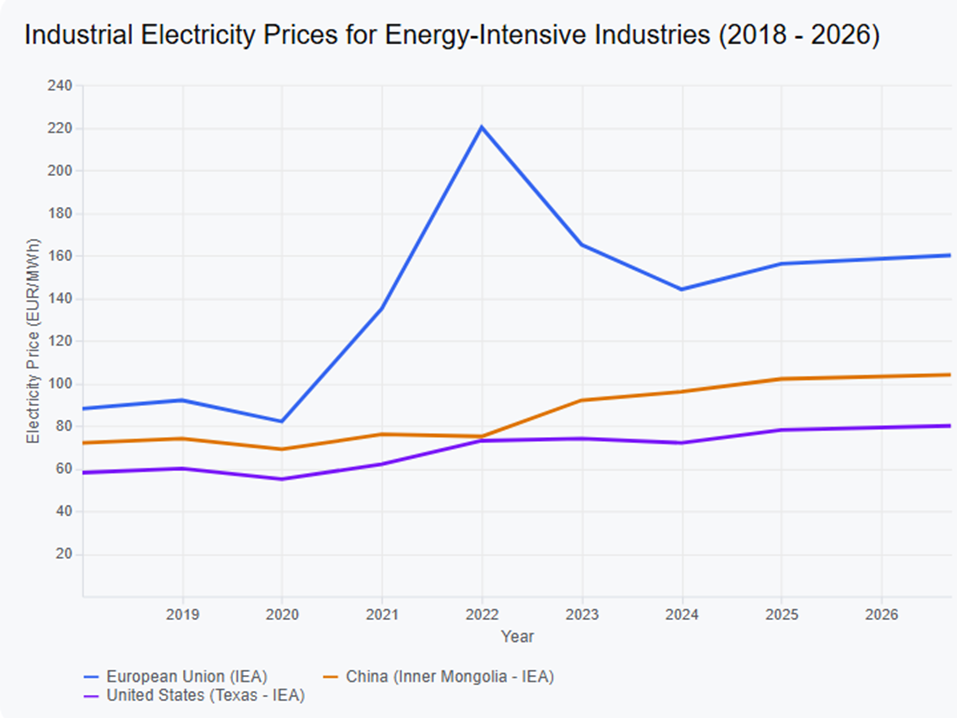
This issue is particularly urgent in the energy sector. Europe has faced a structural electricity cost disadvantage that has become particularly pronounced since the 2022 energy crisis. Today, electricity costs for energy-intensive industries in the EU remain more than twice as high as in the United States and significantly higher than in China, putting sustained pressure on European industrial margins, investment and competitiveness. Furthermore, this European average masks severe internal imbalances, as national prices diverge drastically depending on each country’s energy mix whether heavily reliant on volatile natural gas, anchored by stable nuclear power, or driven by domestic renewables.
For Europe, this makes access to abundant, reliable and competitively priced electricity increasingly important, both globally and internally across Member States.
Meanwhile, Europe must finance not only the green transition but also far-reaching structural modernisation: power grids and infrastructure, common defence, energy security, artificial intelligence, semiconductors and industrial digitalisation.
The capital required is enormous, and it is needed at an unfavourable time. On 10 September 2026, the ECB raised its three key interest rates by 25 basis points, bringing the deposit facility rate to 2.50%. The move responded to renewed inflationary pressure: euro-area inflation had reached 3.3% in August, driven largely by higher energy costs linked to the conflict in the Middle East. The result is an increasingly clear paradox: Europe urgently needs to accelerate strategic investment just as tighter monetary policy makes borrowing more expensive.
But the challenge is not just financial. It is becoming profoundly political.
The difficulties facing European industry cannot be attributed solely to Green Deal deadlines. However, high energy costs, dense regulatory pressures and the need for ever-larger investments are fuelling a fierce debate over the sustainability of Europe’s transition model compared with the more assertive industrial strategies of the United States and China.
The question is simple: how can Europe finance this transformation without allowing its cost to become a new and unsustainable competitive disadvantage?
This is where savings come into play.
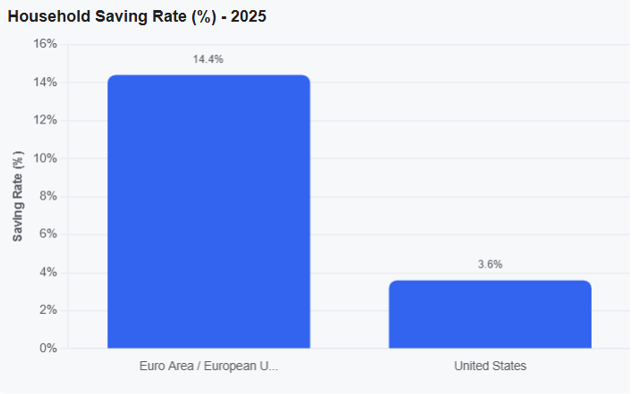
EU households hold approximately €10 trillion in bank deposits. In 2025, the household saving rate was around 14% in the EU, compared with less than 4% in the United States, highlighting the significant pool of private savings available in Europe.
Yet a significant share of European capital is invested outside the European Union. In 2025, US equities accounted for nearly 60% of euro-area residents’ holdings of equities issued outside the euro area.
The paradox is clear: Europe generates substantial savings, but struggles to channel a sufficient share of this wealth into productive investment at home.
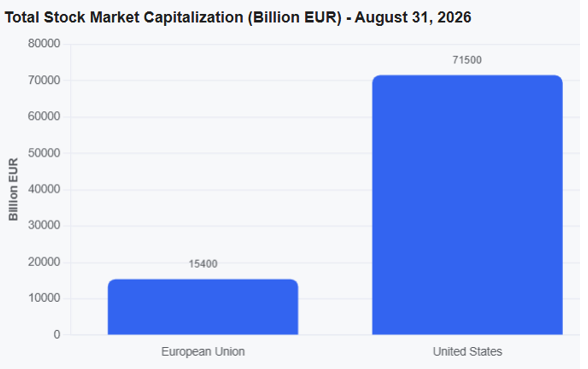
This is the strategic logic behind the Savings and Investments Union (SIU): mobilising private savings, strengthening European equity markets, developing efficient securitisation tools and channelling more capital into long-term investment.
But there is another critical element: de-risking. If private investors regard strategic projects, such as energy infrastructure or advanced technology, as too risky, Europe must be prepared to share part of that risk through public guarantees, co-investment and other risk-sharing mechanisms.
For companies, the SIU and the wider policy framework surrounding it will help reshape the rules of the game. State aid, energy policy, sustainable finance and new risk-sharing instruments will increasingly influence which projects secure funding, at what cost and with what level of public support.
In an environment defined by such rapid and complex shifts, a company’s ability to anticipate regulatory developments and engage effectively with the EU institutions will become an important competitive advantage. SEC Newgate EU supports businesses in interpreting these changes and turning regulatory challenges into strategic market positioning.